
If you live along the Front Range—Fort Collins, Windsor, Loveland, Wellington, Greeley, Longmont, Boulder, or nearby towns—you’ve probably noticed more EVs on the road every month. The convenience of plugging in at home is a big reason people make the switch. But before you buy a charger and start shopping for adapters, it helps to understand what a safe, code-compliant home EV charger installation actually involves.
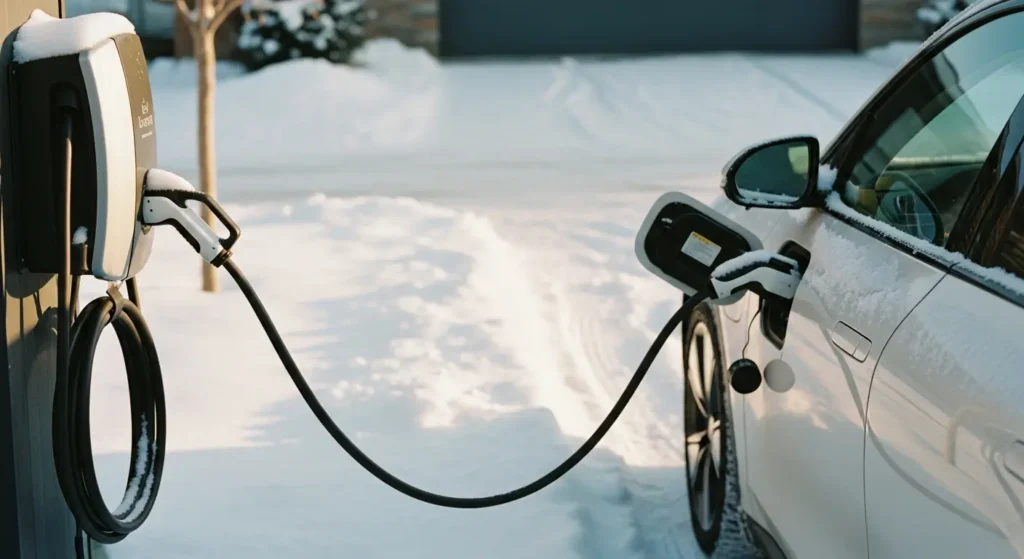
At Three Crowns Electric, we install EV charging solutions for Northern Colorado homeowners who want fast, reliable charging without overloading their home’s electrical system. (And yes—most homes can support it, but the right setup matters.)
What’s the Real Difference?
Most EVs come with a basic Level 1 cord that plugs into a standard outlet. It’s convenient, but it’s also slow—often best for short commutes or overnight “top-offs.”
Level 2 charging uses a dedicated 240V circuit—similar to an electric dryer—so charging is dramatically faster. For many households, Level 2 is the difference between “hope it’s charged by morning” and “it’s always ready.”
The 5 Things That Determine Your EV Charger Setup
EV charger installs aren’t one-size-fits-all. Here’s what we look at when planning an installation in Northern Colorado homes.
1) Electrical panel capacity (and available breaker space)
Your charger needs its own circuit. If your panel is already near capacity—or you’re out of physical breaker spaces—you may need:
- A panel upgrade
A subpanel - Or a load calculation to confirm what your home can safely handle
This is especially common in older homes or homes that have added major loads over time (hot tubs, finished basements, workshop equipment, electric heating, etc.).
2) Charger amperage and charging goals
Some homeowners just want a dependable 240V outlet. Others want a hardwired charger with higher amperage for faster charging. The “right” choice depends on:
- Your EV (or future EV)
- Daily mileage
- How quickly you need to recharge
- Your home’s electrical capacity
A licensed electrician can help match your charger choice to what your electrical system can support safely.
3) Where you want the charger
We often install chargers:
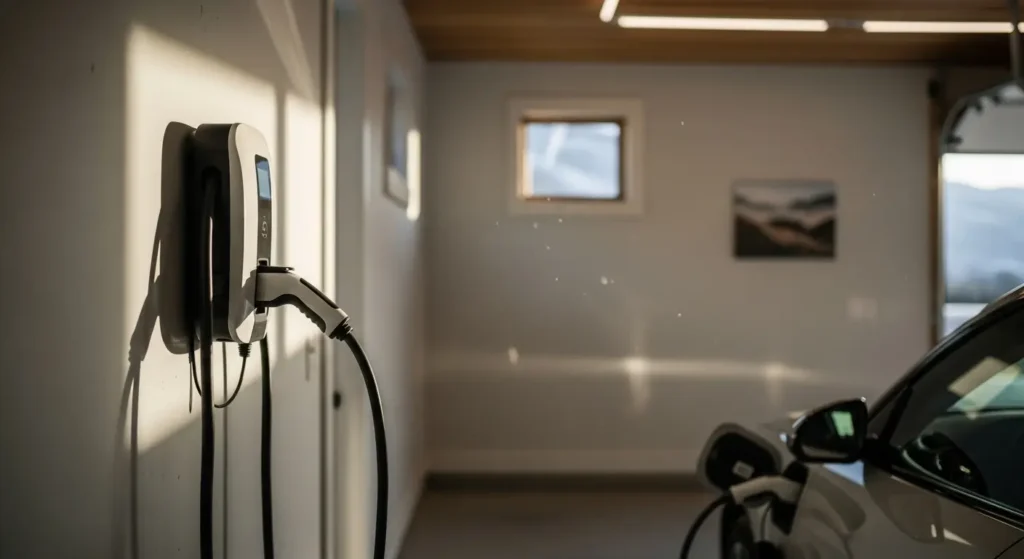
- In the garage (most common)
- On an exterior wall near the driveway
- In a detached garage (requires additional planning)
Location affects installation cost and complexity because of the route from the panel to the charger. Longer runs, finished walls, and detached structures may require more labor and materials.
4) Permits and code compliance
In many cases, adding a new 240V circuit or hardwired EV charger requires permitting/inspection. The goal isn’t paperwork—it’s safety:
- Correct wire sizing
- Proper breaker selection
- Grounding/bonding
- Safe mounting and weather protection (for outdoor installs)
When EV charging is installed correctly, it’s incredibly safe. When it’s rushed or DIY’d, it can become a consistent source of nuisance trips—or worse, an overheating hazard.
5) Northern Colorado conditions (heat, cold, and garages)
Colorado weather swings matter. Garages can be cold in winter and hot in summer, and exterior installs need weather-rated equipment. A proper installation accounts for:
- Outdoor-rated enclosures and fittings (if outside)
- Secure mounting and cable management
- Reliable connections that hold up over time
Outlet Install vs. Hardwired Charger—Which Is Better?
Homeowners often ask if they should install a NEMA 14-50 outlet or hardwire the charger.
Outlet-based setup (plug-in)
- Pros: Flexibility; easy to swap chargers
- Cons: Must use the correct receptacle type and installation method; can be more prone to wear over time if unplugged frequently
Hardwired setup
- Pros: Clean look; fewer connection points; often supports higher charging rates depending on model
- Cons: Less “portable” (though most people don’t move chargers often)
Either can be a great choice—what matters is doing it to code with properly sized wiring, correct breaker protection, and a clean, safe installation.
Signs You Might Need a Panel Upgrade Before Installing an EV Charger
An EV charger is a “continuous load,” meaning it runs for long stretches. That makes panel capacity and wiring condition even more important.
You may need a service or panel upgrade if you notice:
- Frequent breaker trips
- Flickering or dimming lights when appliances run
- An older or crowded panel with no open breaker spaces
Heavy reliance on power strips/extension cords - Plans to add other large loads (hot tub, electric heating, remodel)
(If you’re not sure, a professional evaluation and load calculation removes the guesswork.)
Why Hiring a Licensed Electrician Matters for EV Charging
Home EV charging is simple when it’s installed correctly—and frustrating when it’s not. A licensed electrician helps ensure:
- Safe circuit sizing and load management
- Proper protection for the charger and your home
- Code compliance (and smoother inspections)
- Fewer nuisance trips and charging interruptions
What to Expect During an EV Charger Installation
Most installs follow a straightforward process:
- Evaluate panel capacity and route to charger location
- Confirm charger type and amperage needs
- Install dedicated circuit, outlet (if applicable), or hardwired connection
- Test, verify operation, and clean up
- Coordinate inspection if required
Ready for Faster EV Charging at Home?
If you’re ready to install a Level 2 EV charger in Fort Collins, Windsor, Loveland, Wellington, Greeley, Longmont, Boulder, Erie, or surrounding Northern Colorado communities, Three Crowns Electric can help you choose the right setup and install it safely and professionally. Reach out to schedule an assessment and get your home EV-read